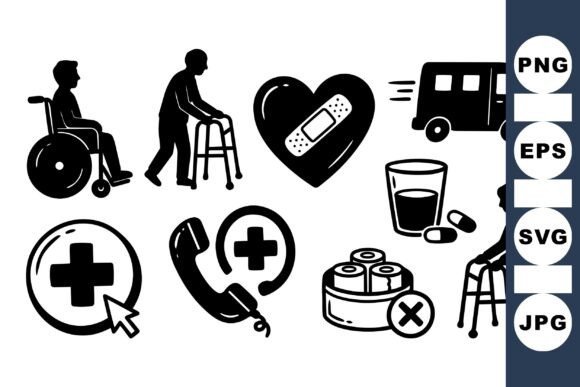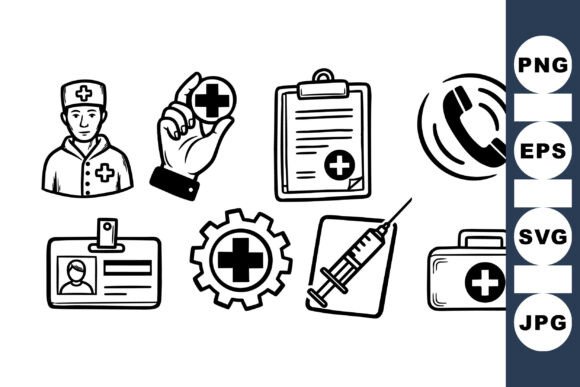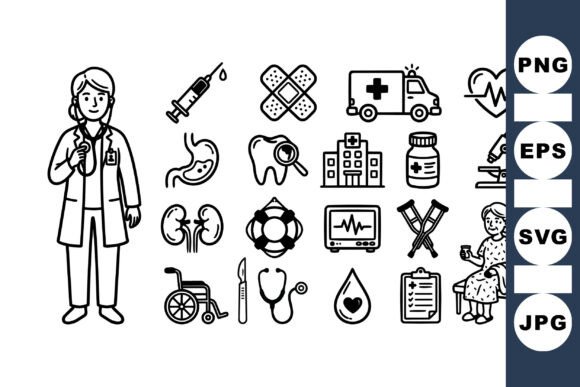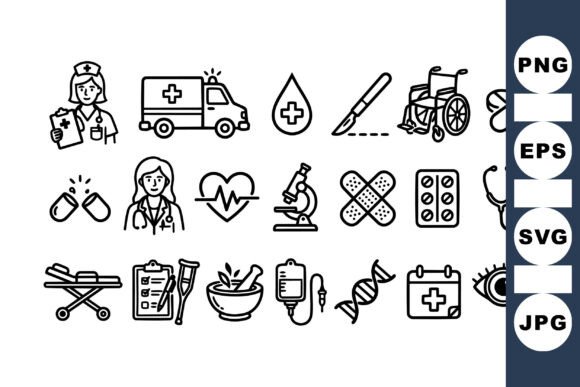
Medical Care Icon Set
A Designer’s First Look: Clean, Calm, and Quietly Confident
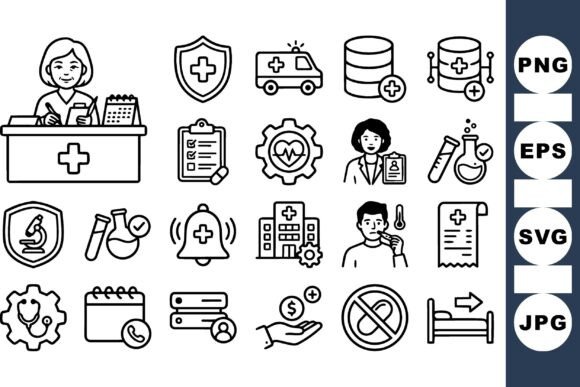
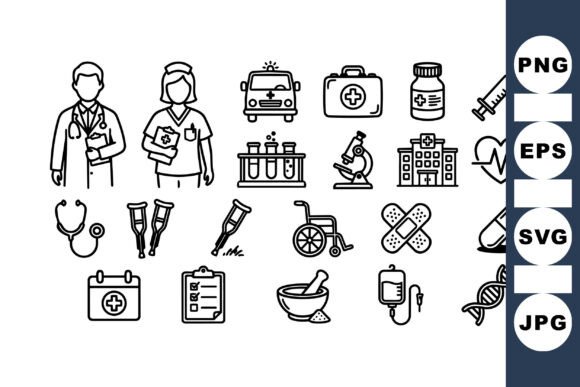
When I unzipped Medical Care Icon Set, what struck me first wasn’t technical precision—it was tone. These aren’t urgent red-cross symbols or clinical diagrams. They’re quiet, balanced line art icons: a stethoscope drawn with one continuous curve, a nurse’s cap simplified to three soft angles, a heart rendered as two mirrored teardrops. The minimalism feels intentional—not stripped down for trendiness, but edited for clarity and calm. That matters deeply when you’re stitching for real people: nurses buying personalized sweatshirts, pediatric clinics ordering embroidered tote bags, or new parents gifting baby blankets with subtle “care” motifs. This set doesn’t shout. It reassures.
How It Stitches in the Real World
I tested Medical Care Icon Set across five common craft business scenarios—no digital-only assumptions, just needle-in-fabric reality. On a cotton twill apron for a boutique clinic gift set? Crisp. The line weight held up beautifully under medium-density satin stitch, no feathering or breakage at curves. On a lightweight organic cotton baby onesie? I switched to running stitch with reduced density and added tear-away stabilizer underneath—still legible, still gentle. For an embroidered patch on a denim jacket? Perfect. The clean outlines translated cleanly into applique design territory, especially the syringe and caduceus icons, which read instantly even at 1.5 inches tall.
Where it shines brightest is in custom apparel that balances professionalism and warmth: embroidered sweatshirt fronts for hospital volunteer teams, tea towel sets for nursing school graduations, pillow covers for NICU family lounges. Because the icons avoid clichés (no cartoonish hearts, no exaggerated pill bottles), they carry quiet authority—ideal for small shop products where handmade presentation meets real-world credibility.
Where to Proceed Thoughtfully
This isn’t a “drop-and-stitch” file for every surface. On stretchy knit t-shirts? Use light cutaway stabilizer and reduce stitch speed—those fine lines can blur if tension wobbles. On dark fabric? Test thread colors early: a charcoal gray satin stitch on navy reads softer than black, and preserves the icon’s delicate rhythm. On curved surfaces like caps? Prioritize the simpler icons—the heartbeat line or cross—over anything with tight interior corners, like the detailed EKG waveform. And avoid using the smallest icons (under 0.75”) on textured fabrics like terry cloth or bouclé—detail gets lost, not softened.
Also worth noting: while the vector files suggest scalability, embroidery isn’t vector rendering. Tiny lettering isn’t included here (a strength, honestly), but if you plan to add custom text alongside these icons—say, “Est. 2012” beneath a stethoscope on a boutique tote bag design—you’ll need to size and space it carefully to maintain visual balance.
What It Adds to Your Finished Product
- Visual appeal: Feels considered, not generic—elevates a plain tote bag into something a nurse might proudly carry to shift.
- Stitching clarity: No dense fill stitch areas means lower thread consumption, smoother hooping, and fewer restarts mid-project.
- Product value: Customers recognize restraint. A minimalist medical icon signals care and competence—more so than a busy, clip-art-style alternative.
- Brand consistency: Works equally well for a solo Etsy seller’s “nursing gifts” shop and a small clinic’s branded merchandise line—same visual language, different scale.
- Giftability: Embroidered baby items with the pacifier + heart icon feel tender, not clinical. Holiday embroidery on a linen kitchen towel? Warm, not sterile.
Practical Notes Every Embroidery Designer Should Check
Before cutting fabric or loading your machine:
- Test Medical Care Icon Set on scrap fabric matching your final project’s weight and weave—even if it’s “just cotton.” Thread behavior changes fast.
- Review stitch density in your editing software. These icons were clearly designed for line-based execution; overfilling them defeats their purpose.
- Confirm hoop size compatibility. Some icons scale beautifully to 4x4”, but the full staff lineup may need 5x7” for spacing clarity.
- Inspect small details at actual stitch size: zoom in on your embroidery software preview—do the stethoscope earpieces stay distinct? Does the IV bag’s drip line hold?
- Mock it up in black and white first. If it reads clearly without color, you’ve got strong design bones.
- Compare light and dark fabric backgrounds side-by-side. Minimal line art gains or loses presence dramatically depending on contrast.
- Use appropriate stabilizer—not just “some,” but the right type: cutaway for knits, tear-away for stable wovens, fusible for lightweight linens.
- Verify licensing terms before selling finished products or bundling the files into digital embroidery kits. Since this is categorized under Graphics, not Crafts, commercial use permissions may vary—check before listing on Etsy or launching a craft fair collection.
Final Thought: Less Is Anchored, Not Empty
Medical Care Icon Set won’t suit every embroidery project—and that’s its strength. It’s not trying to be everything. It’s a focused toolkit for makers who understand that in healthcare-themed work, trust lives in restraint. Whether you’re stitching a personalized gift for a retiring pharmacist, designing patches for a med student group, or building a cohesive line of boutique nursery decor, this set gives you clean, confident visual shorthand—no explanation needed, no clutter required. It’s the kind of design that looks better after it’s stitched, not before. And in our world—where every thread counts—that’s rare, and valuable.