Medical Symbols Vector Collection
First Impressions: Clean, Calm, and Professionally Grounded
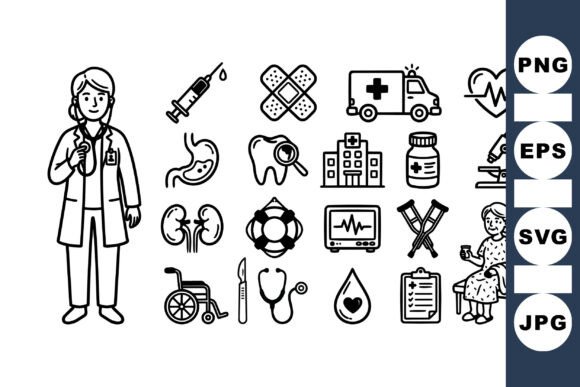
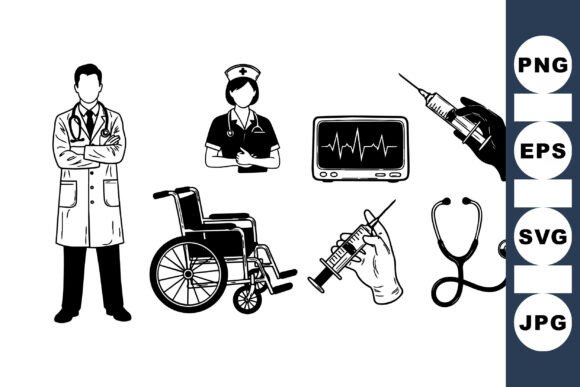
Opening Medical Symbols Vector Collection feels like stepping into a well-organized clinic—quiet, intentional, and reassuring. These aren’t flashy or cartoonish icons; they’re balanced, confident black-and-white vector illustrations with clear silhouettes and thoughtful negative space. The standing doctor with crossed arms reads as calm authority. The nurse with clipboard suggests approachability and care. Even the syringe held by gloved hands avoids clinical coldness—it’s precise, not sterile. This collection doesn’t shout. It listens. That makes it ideal for embroidery projects where tone matters as much as imagery: baby blankets for NICU families, boutique aprons for holistic health practitioners, or personalized tote bags for med students starting rotations.
Where It Shines in Real Embroidery Projects
I recently tested one of the heart rate monitor icons on a lightweight cotton tea towel—intended for a small shop’s “Wellness Week” launch. Stitched with a medium-density fill stitch and standard tear-away stabilizer, the clean lines held beautifully. No feathering, no distortion. The simplicity translated directly to clarity in thread: even at 3.5 inches wide, every curve read clearly from across the room. That’s rare in medical-themed designs, which often sacrifice legibility for symbolism.
This collection works especially well for:
- Custom apparel—sweatshirts and crewnecks benefit from the bold, uncluttered shapes (no tiny details to vanish in knit texture)
- Embroidered patches—the stethoscope and wheelchair icons scaled cleanly down to 2 inches without losing identity
- Baby embroidery—the nurse and heart monitor icons softened the clinical feel just enough for nursery decor and onesies
- Holiday embroidery—a subtle, stitched heart rate monitor on a linen pillow cover added quiet meaning to a caregiver’s Christmas gift
- Etsy listings and printable mockups—the vector base means crisp digital previews, and the monochrome palette lets buyers easily imagine it in navy, charcoal, or oatmeal fabric
Where to Pause—and Plan Ahead
Not every icon behaves the same under needle and thread. The syringe held by gloved hands has fine wrist definition and narrow glove fingers—those areas will demand tighter stitch density and possibly a lightweight cut-away stabilizer on stretchy fabrics like jersey or ribbed knits. On dark fabric, I’d recommend testing thread contrast first: matte black thread on charcoal sweatshirt fabric can mute detail, while a soft charcoal gray thread on black gives more dimension.
Be mindful with:
- Small hoop sizes—the full “doctor + nurse + stethoscope” layout is best suited for 4x4 hoops or larger; compressing it risks collapsing the spacing between figures
- Textured or napped fabrics—like terry cloth towels or fleece—where fine linework may disappear into pile
- Curved surfaces—caps and beanies require repositioning and sometimes slight simplification of corner details (e.g., the clipboard’s edge or stethoscope tubing)
- Frequent-wash items—like kitchen towels or baby bibs—confirm stitch density supports durability; overly sparse running stitches won’t hold up over time
What It Adds to Your Handmade Product—Beyond Aesthetics
Using Medical Symbols Vector Collection isn’t just about placing an icon—it’s about signaling intention. A nurse icon on a hand-embroidered apron tells customers you value care, precision, and human-centered work. That builds trust faster than any tagline. For Etsy sellers, that quiet professionalism lifts perceived value: buyers pay more for items that feel thoughtfully designed, not trend-chased.
It also supports brand consistency. If you sell wellness-focused craft kits or handmade scrubs, these icons unify your visual language across packaging, social posts, and physical products—without needing custom illustration each time. And because they’re black and white vectors, they adapt seamlessly: stitch them in sage green thread for a naturopathic line, or metallic silver for a modern med-tech collaboration.
Practical Designer Notes Before You Stitch
Before committing to a client project or bulk production:
- Test on scrap fabric first—especially if using textured, stretchy, or dark material
- Check thread color contrast in natural light and under store lighting; what reads well on screen may blur in real life
- Review stitch density—dense fill areas (like the doctor’s coat) should balance with open areas (like the clipboard’s blank surface) to avoid puckering
- Confirm hoop size compatibility—some icons scale beautifully, but layered groupings may need rearranging for smaller hoops
- Inspect small details—zoom in on glove fingers, stethoscope tubing, and heart monitor screen edges to ensure they’ll translate cleanly
- Test in black-and-white mockups—this reveals how well the design holds up without color crutches
- Compare light and dark fabric backgrounds—same icon, different impact
- Use proper stabilizer—lightweight cut-away for knits, tear-away for stable wovens, and fusible for sheer fabrics
- Verify licensing—since this is a Graphics product in the Crafts category, confirm whether commercial use (e.g., selling finished embroidered totes or digital embroidery files) is permitted before listing on Etsy or launching a small shop product
A Design That Earns Its Place
Medical Symbols Vector Collection doesn’t try to be everything. It’s not playful, nor is it ultra-minimalist. It’s grounded, respectful, and technically considerate—exactly what thoughtful embroidery demands. Whether you’re stitching a single personalized gift or building a cohesive line of wellness-themed merchandise, this collection offers reliable, recognizable, and quietly meaningful design assets. It respects the craft, the wearer, and the context. And in embroidery—where every stitch carries weight—that’s the highest compliment.